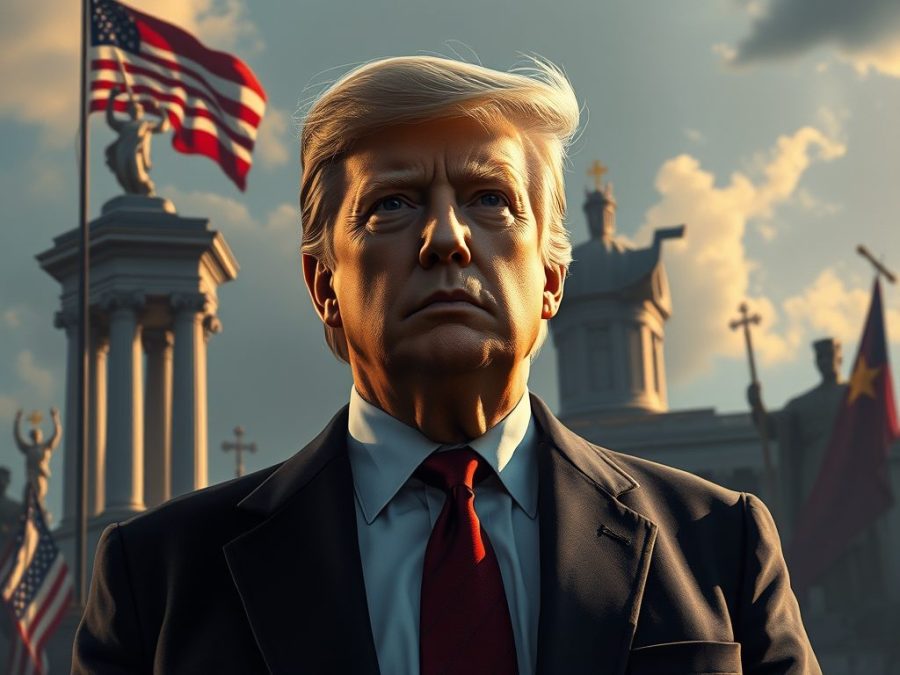
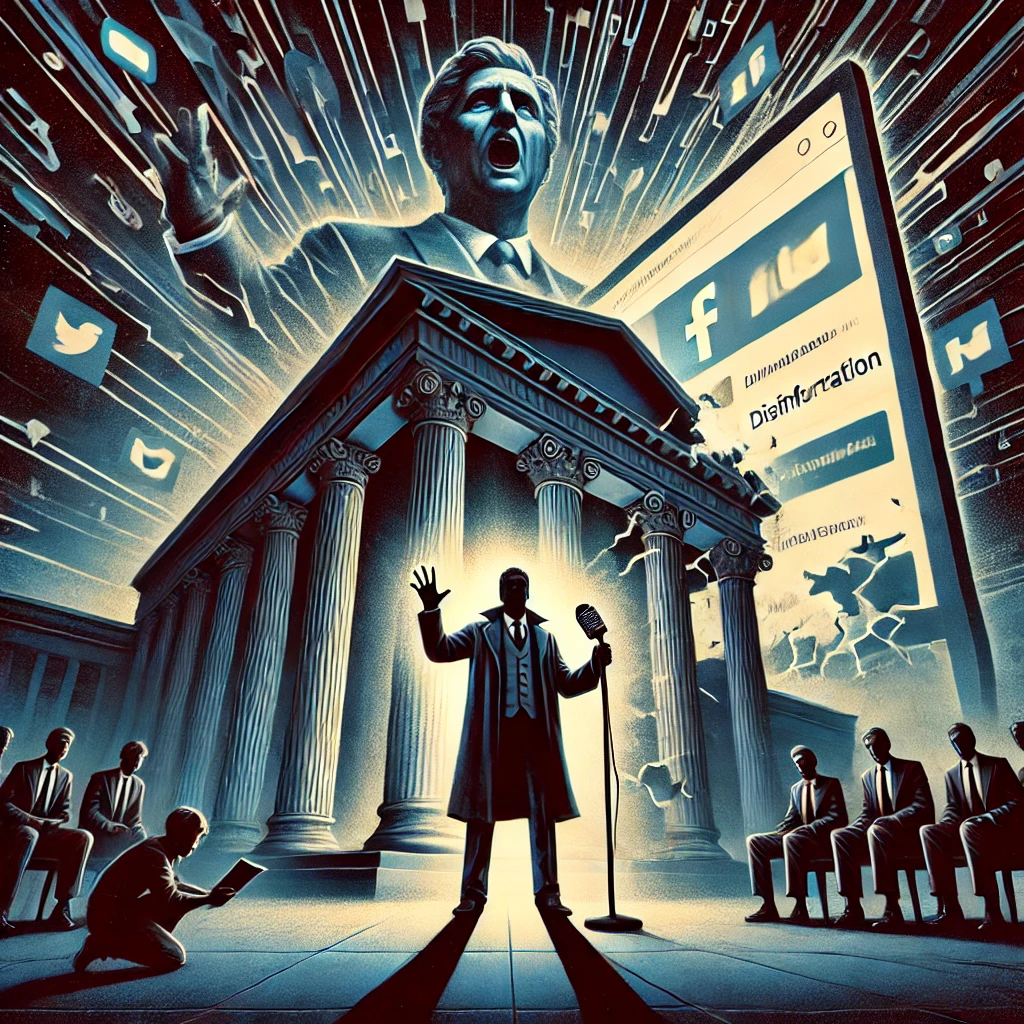
History tends to repeat itself, and often, we recognize its warnings only when it is almost too late. Today, we stand at one of those historic tipping points where democracy’s very foundations are being eroded—not by a single dictator, but by a network of power-seekers who view the rule of law as an obstacle rather than a principle. Donald Trump, Elon Musk, and their ideological allies are working to hollow out democratic institutions, replacing them with a reality where the separation of powers is deemed outdated, the judiciary is portrayed as corrupt, and free journalism is cast as the enemy.
The Systematic Dismantling of Checks and Balances
The separation of powers is not just an antiquated concept from the 18th century—it is the backbone of any functioning democracy. Trump demonstrated during his presidency how easily this backbone can be manipulated. His attacks on judges, the politicization of the Department of Justice, and his demands for personal loyalty over legal integrity were not coincidences, but deliberate tactics. “I alone can fix it,” Trump once proclaimed—a phrase that, in its chilling simplicity, negates the very essence of democratic governance.
Meanwhile, Elon Musk, now the overseer of one of the most powerful digital platforms for information, uses his influence not to foster democratic debate but to amplify authoritarian narratives. Critical journalists are silenced, disinformation is given prominence, and democratic scrutiny is reframed as censorship. The underlying message is clear: “Freedom for me, but not for you.”
While Trump and Musk pursue different agendas, their objective is the same: control over the narrative. They understand that democracy does not collapse in a single day—it is gradually hollowed out, its foundations eroded bit by bit, until only an empty shell remains.
Annie Lee Moss: Defiance Against the Tribunal of Denunciation
History provides stark warnings about how public tribunals have been used to destroy individuals. In the 1950s, McCarthyism weaponized baseless accusations of “disloyalty,” ruining lives without evidence.
Annie Lee Moss, a modest Pentagon employee, was one such target. Summoned before Senator Joseph McCarthy’s infamous committee, she was accused of Communist ties—an allegation that, at the time, was tantamount to professional exile. Yet, Moss refused to cower.
McCarthy opened with a smug interrogation: “Are you a Communist?” Moss, unshaken, responded: “No, sir. I have never seen a membership card, let alone owned one.”
Roy Cohn, McCarthy’s right-hand man, attempted to entrap her with seemingly benign questions: “Have you ever read the Daily Worker?” Moss remained steadfast. “A man once brought it to my house, but my husband told him not to bring it anymore.”
But it wasn’t just her resilience that rattled the committee—it was the power of simple truth. “If you have any evidence, show it to me,” Moss challenged. None existed.
Senator Stuart Symington, seeing the absurdity unfold, turned to her and said: “I think you’re telling the truth. If the Army doesn’t take you back, come to me—I’ll help you.”
This was one of the moments where McCarthyism began to unravel. The sheer baselessness of the accusations, the cruelty of the proceedings, and the shameless abuse of power became undeniable. The American public, watching, began to ask: Who were the real threats to democracy?
Edward R. Murrow and the Duty to Speak the Truth
Edward R. Murrow was one of the few journalists courageous enough to confront McCarthy. In one of his most legendary broadcasts, he reminded Americans: “We must remember that accusation and proof are not the same thing.”
He warned of the perils of undermining the rule of law: “If an accusation without evidence is enough, then no one is safe.”
Murrow let McCarthy’s own words indict him, broadcasting clips of the senator’s contradictory and baseless claims. It was a masterclass in journalism—a real-time dissection of an autocrat.
Quoting President Dwight D. Eisenhower, Murrow reinforced the pillars of American democracy:
“In this country, if someone dislikes you or accuses you, he must confront you face to face. He cannot hide in the shadows. He cannot assassinate your character from ambush without suffering the punishment of an outraged citizenry.”
What We Must Do Today
History teaches us that democracy does not fall overnight—the descent into autocracy is a slow but deliberate process. However, this path is not inevitable. We must act decisively:
- Protect Journalism: A free press is democracy’s greatest defense against disinformation. Without investigative journalism, democracy withers.
- Strengthen the Judiciary: Judges and prosecutors must remain independent from political influence. The rule of law is non-negotiable.
- Regulate Digital Platforms: Freedom of expression must not be subject to the whims of a single tech billionaire. Safeguards against digital manipulation are imperative.
- Show Moral Courage: Annie Lee Moss had nothing but her dignity and the truth—yet she stood her ground and won. We need more people like her.
Murrow closed his most famous broadcast with the words: “Good night, and good luck.”
Today, as democracy stands at a precipice, we must remember: The truth remains our most powerful bulwark against the bulldozers of power.
Pingback: ichsagmal.com – weisseis